Variability of HPLC and MS Laboratory Analysis Results
TL;DR: Laboratory analysis results can differ even for the same test material, because methods such…

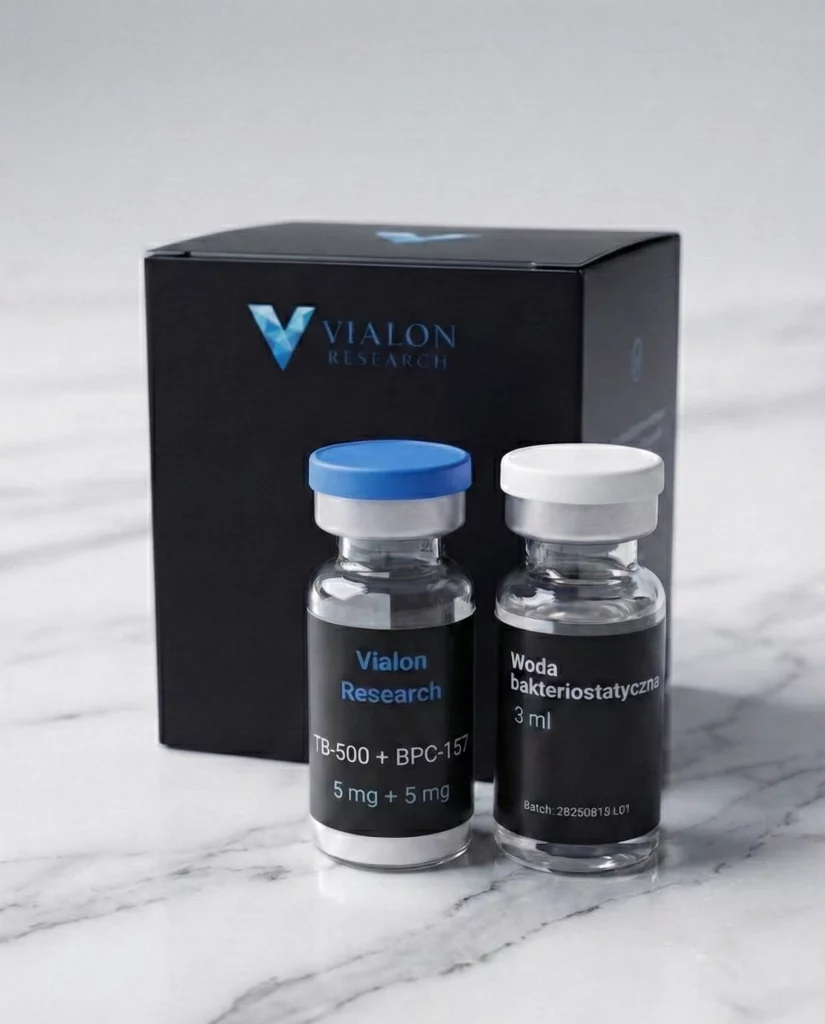
Two research peptides in one vial
| Parameter | Value |
|---|---|
| Molecular formula | C₆₂H₉₈N₁₆O₂₂ |
| Molecular weight | ~1419.5 Da |
| Amino acid count | 15 (pentadecapeptide) |
| CAS number | 137525-51-0 |
| PubChem CID | 9941957 |
| Purity | ≥98% (RP-HPLC) |
| Classification | Chemical reagent / research material |
| Intended use | For in vitro research use only, not for use in humans or animals |
| Parameter | Value |
|---|---|
| Molecular formula | C₂₁₂H₃₅₀N₅₆O₇₈S |
| Molecular weight | ~4963.4 Da |
| Amino acid count | 43 |
| CAS number | 77591-33-4 |
| PubChem CID | 16132341 |
| Purity | ≥98% (RP-HPLC) |
Not classified as a hazardous substance under CLP regulation. Offered as a chemical reagent for in vitro laboratory use, within the framework of applicable European Union chemical substances regulations (REACH, CLP).
Reconstitution and storage conditions:
Typical analytical equipment:
All working parameters should be selected according to the research laboratory’s internal protocol. Product intended exclusively for in vitro and analytical use; not for human or animal use.
TB-500 contains a central G-actin binding domain, with the key fragment being the LKKTETQ sequence (amino acids 17-23 of thymosin beta-4). This domain binds G-actin monomers in a 1:1 ratio, sequestering them and regulating the dynamics of F-actin filament polymerization. In vitro studies on cell lines have demonstrated that the LKKTETQ sequence is sufficient to promote endothelial cell migration, cytoskeleton reorganization, and lamellipodia formation. Thymosin beta-4, from which TB-500 derives, serves in model organisms as the principal protein buffering the free G-actin pool, making it a key regulator of cell motility.
BPC-157 acts on distinct signaling pathways. In animal models (rats), its effects on the nitric oxide (NO) pathway through modulation of NO synthase (eNOS) expression have been described. This peptide also stimulates expression of growth factors including VEGF (vascular endothelial growth factor) and EGF (epidermal growth factor), which in rat studies correlated with enhanced angiogenesis. At the intracellular level, BPC-157 interaction with the FAK (focal adhesion kinase) and paxillin pathway has been described, proteins critical for cell adhesion. Additionally, in mouse models, interactions with the dopaminergic (D2 receptors) and GABAergic systems were observed, distinguishing BPC-157 among peptides with regenerative profiles.
A unique feature of BPC-157 is its stability in acidic environments. As a fragment of gastric juice protective protein, it maintains biological activity at pH below 2.0, confirmed in in vitro stability tests. TB-500, with its mass of ~4963 Da and 43 amino acids, is a significantly larger molecule more susceptible to proteolytic degradation.
The complementarity of both peptides stems from the fact that they act on different but convergent molecular pathways. TB-500 affects cytoskeleton dynamics and cell migration (structural side), while BPC-157 modulates angiogenesis, neurotransmission, and cell adhesion (signaling side). In animal models, both processes are essential for tissue regeneration, providing the theoretical basis for studying them in combination.
Thymosin beta-4 was first isolated and characterized by Allan L. Goldstein's group at George Washington University in the 1960s-70s. Goldstein and colleagues described it as a component of the thymosin fraction from calf thymus, and later work demonstrated its ubiquitous expression in nucleated mammalian cells and high concentration in platelets [1].
A landmark paper was published by Bock-Marquette et al. in 2004 in Nature. In a mouse myocardial ischemia model, thymosin beta-4 was shown to activate integrin-linked kinase (ILK), promoting cardiomyocyte migration and survival. Mice receiving Tβ4 after coronary artery ligation showed significantly smaller necrosis areas compared to controls [2].
Malinda et al. (1999) studied the effect of thymosin beta-4 on wound healing in the rat model. In full-thickness skin wounds, Tβ4 application accelerated wound closure, increased collagen deposition, and stimulated angiogenesis in granulation tissue compared to saline controls [3].
Smart et al. (2007) published in Nature results showing that thymosin beta-4 reactivates epicardial progenitor cells in adult mouse hearts. After Tβ4 administration, differentiation of epicardial cells toward vascular smooth muscle cells and potentially cardiomyocytes was observed [4].
Sosne et al. conducted a series of studies on Tβ4 effects on corneal healing. In rat and mouse corneal injury models, Tβ4 reduced inflammation, decreased corneal epithelial cell apoptosis, and accelerated re-epithelialization [5].
The primary research center for BPC-157 is the Department of Pharmacology at the University of Zagreb, led by Professor Predrag Sikiric. This group first isolated the BPC sequence from human gastric juice and developed the synthetic pentadecapeptide BPC-157. In over 100 publications, Sikiric and colleagues described a broad spectrum of biological activity of this peptide in rat models, encompassing wound healing, gastric mucosal protection, and nervous system modulation [6].
Seiwerth, Sikiric, and colleagues investigated BPC-157 effects on angiogenesis in rat wound healing models. In full-thickness skin wounds, increased VEGF expression and accelerated new blood vessel formation in granulation tissue were demonstrated. This effect was observed after both systemic (intraperitoneal) and local administration [7].
Sikiric et al. published a dedicated review on BPC-157 interactions with the nitric oxide system. BPC-157 was shown to modulate the NO pathway in a context-dependent manner, counteracting both NO synthase blockade (L-NAME) and NO excess (L-arginine). This bidirectional modulation suggests the peptide acts as an NO homeostasis stabilizer [8].
Staresinic et al. (2003) applied BPC-157 in a rat Achilles tendon transection model. Animals receiving BPC-157 showed significantly better collagen fiber organization, higher biomechanical tendon strength, and faster attachment reintegration compared to controls. In vitro studies confirmed the stimulatory effect on tendocyte growth [9].
In an extensive review, Sikiric et al. (2016) summarized decades of BPC-157 research in the brain-gut axis context, describing interactions with dopaminergic (D2), serotonergic, GABAergic, and opioid pathways in animal models [10].
It should be noted that most published studies concern each peptide individually. To date, no large controlled in vivo studies evaluating the TB-500 and BPC-157 combination have been published in peer-reviewed literature. The rationale for combining both peptides in research protocols is based on their complementary molecular mechanisms: TB-500 acts on the actin cytoskeleton and cell migration, while BPC-157 modulates angiogenesis through the NO/VEGF pathway. Preliminary data from in vitro cell migration assays suggest that simultaneous exposure to both peptides may lead to additive effects, but these results require confirmation in controlled animal studies. This is an active area of research, and the availability of a ready-made blend facilitates design of such comparative experiments.
In lyophilized (dry) form, the TB-500 + BPC-157 blend maintains stability for many months when stored at -20°C to -80°C, protected from light and moisture. Keep the lyophilized powder in the original sealed vial.
After reconstitution in sterile water, store the solution at 2-8°C and use within 30 days. BPC-157, as a gastric protein fragment, shows higher stability in acidic environments than TB-500, which is relevant when designing research buffers. TB-500, due to its larger molecular weight (~4963 Da vs ~1419 Da), is more susceptible to proteolytic degradation and aggregation.
In laboratory practice, it is essential to avoid repeated freeze-thaw cycles (aliquoting into single-use portions is recommended) and to maintain aseptic technique when sampling.
| Feature | BPC-157 | TB-500 |
|---|---|---|
| Origin | Fragment of gastric juice protein | Fragment of thymosin beta-4 |
| Sequence | 15 amino acids (GEPPPGKPADDAGLV) | 43 amino acids |
| Molecular weight | ~1419.5 Da | ~4963 Da |
| Primary mechanism | NO modulation, FAK-paxillin pathway | G-actin sequestration, cytoskeleton regulation |
| Stability at pH < 2 | High | Low |
Due to their different mechanisms of action, simultaneous use of both peptides has been explored in in vitro studies, forming the basis for this blend.
Both components are also available separately: BPC-157 and TB-500.
Selected publications on thymosin beta-4 (TB-500) and pentadecapeptide BPC-157 in animal and in vitro models.
"Thymosin beta-4: actin-sequestering protein moonlights to repair injured tissues"
Trends in Molecular Medicine, 11(9):421-429
"Stable gastric pentadecapeptide BPC 157: novel therapy in gastrointestinal tract"
Current Pharmaceutical Design, 17(16):1612-1632
Produkt jest surowcem chemicznym przeznaczonym wyłącznie do zastosowań badawczych, naukowych i analitycznych in vitro. Nie jest przeznaczony do użytku ludzkiego ani weterynaryjnego, w tym w celach diagnostycznych, terapeutycznych, profilaktycznych lub żywieniowych.
Produkt nie jest sklasyfikowany jako substancja niebezpieczna zgodnie z rozporządzeniem CLP (WE) nr 1272/2008. Oferowany jest jako odczynnik chemiczny w ramach obowiązujących w Unii Europejskiej przepisów dotyczących substancji chemicznych (REACH, CLP). Nie stanowi produktu leczniczego, suplementu diety, wyrobu medycznego ani kosmetyku w rozumieniu obowiązujących przepisów prawa.
Substancję niewykorzystaną należy utylizować zgodnie z lokalnymi przepisami dotyczącymi odpadów chemicznych. W warunkach laboratoryjnych: neutralizować i utylizować wraz z odpadami laboratoryjnymi. Nie wylewać do kanalizacji.
Produkt oferowany jest zgodnie z obowiązującymi przepisami Unii Europejskiej dotyczącymi substancji chemicznych (REACH, CLP) oraz prawem polskim w zakresie obrotu odczynnikami chemicznymi i materiałami badawczymi. Pełne warunki sprzedaży oraz klasyfikacja produktu zawarte są w Regulaminie Sklepu.
Dokonując zakupu, Klient potwierdza zapoznanie się z powyższymi informacjami oraz akceptuje postanowienia Regulaminu.
W przypadku pytań dotyczących obchodzenia się z produktem lub informacji regulacyjnych: kontakt@peptydy-sklep.com.
Ověřená hodnocení zákazníků tohoto produktu
Blend wygodniejszy niż zamawianie osobno. Dostawa następnego dnia
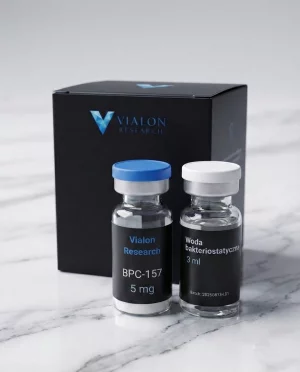
Zestaw dwóch peptydów badawczych
TL;DR: Laboratory analysis results can differ even for the same test material, because methods such…
TL;DRThis article explains how HPLC/MS is widely used as a set of laboratory analytical methods…
Reading a COA requires verifying the batch, analytical methods, acceptance criteria, and test results.
This is a research blend combining two peptides in a single lyophilized vial: TB-500 (43-amino acid thymosin beta-4 fragment) and BPC-157 (15-amino acid gastric pentadecapeptide). The blend eliminates the need for separate reconstitution.
Available in 10 mg and 20 mg blend variants. The product is supplied in a hermetically sealed glass vial.
The blend offers the same peptides at the same purity (≥98% HPLC) as our individual TB-500 and BPC-157 products, combined in one vial for convenience. Both individual products are also available separately.
Store lyophilized blend at -20°C to -80°C. After reconstitution, store at 2-8°C and use within 30 days. Avoid repeated freeze-thaw cycles.
Yes. All our peptides are available as chemical reagents for research purposes. We ship from Poland with next-day delivery. Free shipping on orders over 299 PLN.