Variability of HPLC and MS Laboratory Analysis Results
TL;DR: Laboratory analysis results can differ even for the same test material, because methods such…

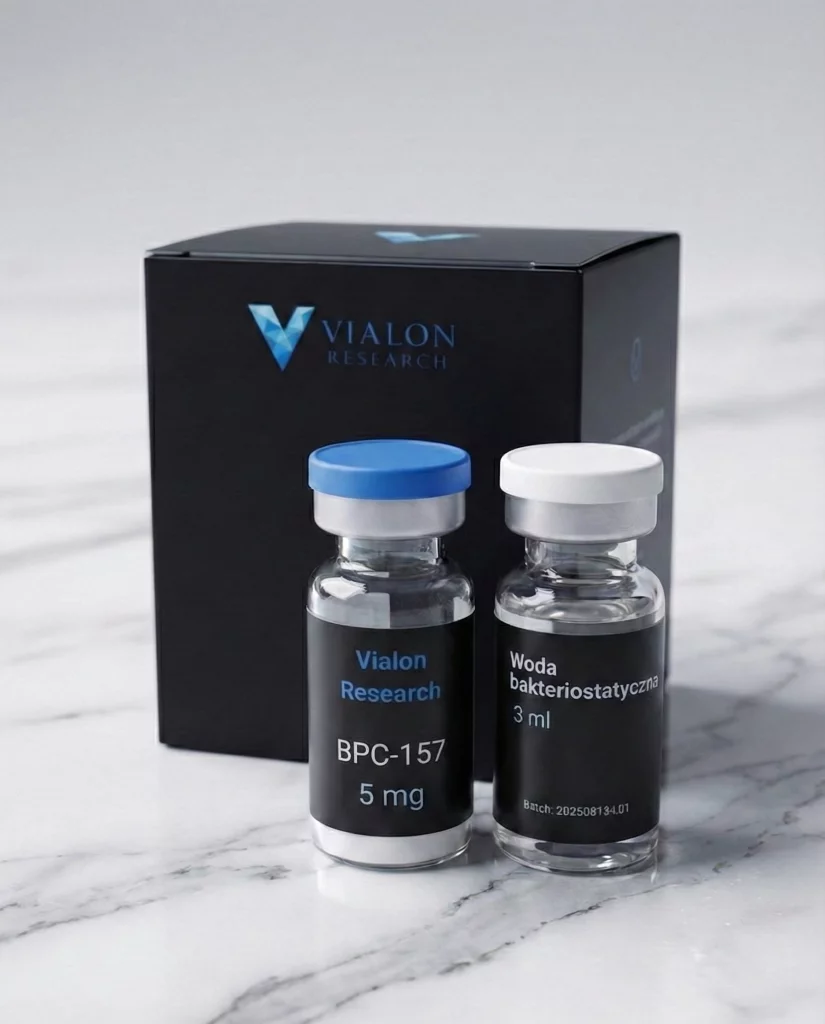
Gastric pentadecapeptide · 15 amino acids · CAS 137525-51-0
| Parameter | Value |
|---|---|
| Molecular formula | C₆₂H₉₈N₁₆O₂₂ |
| Molecular weight | ~1419.5 Da |
| Amino acid count | 15 (pentadecapeptide) |
| Sequence | GEPPPGKPADDAGLV |
| CAS number | 137525-51-0 |
| PubChem CID | 9941957 |
| Physical form | White lyophilized powder |
| Purity | ≥98% (RP-HPLC) |
| Classification | Chemical reagent / research material |
| Intended use | For in vitro research use only, not for use in humans or animals |
Not classified as a hazardous substance under CLP regulation. Offered as a chemical reagent for in vitro laboratory use, within the framework of applicable European Union chemical substances regulations (REACH, CLP).
Reconstitution and storage conditions:
Typical analytical equipment:
All working parameters should be selected according to the research laboratory’s internal protocol. Product intended exclusively for in vitro and analytical use; not for human or animal use.
BPC-157 (Body Protection Compound-157) is a synthetic pentadecapeptide consisting of 15 amino acid residues with the sequence GEPPPGKPADDAGLV. This peptide is a fragment of a longer protein first isolated from human gastric juice by the Zagreb research team led by Prof. Predrag Sikiric. Under laboratory conditions, BPC-157 is produced by solid-phase peptide synthesis (SPPS), achieving purity exceeding 98% as confirmed by HPLC analysis.
From a peptide chemistry standpoint, BPC-157 is distinguished by several notable structural features. The sequence contains no aromatic amino acid residues (phenylalanine, tyrosine, tryptophan), resulting in reduced susceptibility to UV-induced degradation. The high proportion of small and polar amino acid residues (glycine, proline, alanine, aspartic acid) gives this molecule of ~1419.5 Da exceptional stability in strongly acidic environments (pH < 2.0), consistent with its gastric origin and a rarity among peptides of this size.
Existing in vitro and animal model studies indicate a multidirectional mechanism of action for BPC-157. One of the best-documented pathways is modulation of the nitric oxide (NO) system. In the rat model, bidirectional effects on nitric oxide synthases have been observed: stimulation of the endothelial form (eNOS) with simultaneous inhibition of the inducible form (iNOS), suggesting a role in maintaining vascular homeostasis.
In angiogenesis research, BPC-157 has been shown to stimulate expression of vascular endothelial growth factor (VEGF) and epidermal growth factor (EGF) in cell cultures. At the cellular level, the peptide activates the focal adhesion kinase (FAK) and paxillin signaling pathway, which plays a key role in cell adhesion and migration processes. This mechanism has been studied in the context of wound healing models in rats.
In animal models concerning the central nervous system, interactions of BPC-157 with the dopaminergic (D2 receptors), GABAergic, and serotonergic systems have been described. In the rat model, effects on behaviors related to the brain-gut axis were observed. Additionally, numerous studies on gastric models have demonstrated cytoprotective properties of this pentadecapeptide with respect to gastric mucosa exposed to damaging agents.
The most comprehensive review of BPC-157 research in the gastrointestinal context was published by the Sikiric team in 2011 [1]. The paper summarizes results from years of experiments in rat models, demonstrating the cytoprotective effects of the pentadecapeptide on gastric mucosa exposed to ethanol, hydrochloric acid, NSAIDs, and immobilization stress. These studies showed accelerated repair processes in gastric ulcer models, as well as beneficial effects in inflammatory bowel disease models in rats, including TNBS- and DSS-induced colitis.
In a 2014 paper, Seiwerth et al. [2] examined the effects of BPC-157 on blood vessels in animal models. In a series of in vivo experiments in rats, the peptide was shown to stimulate formation of new blood vessels (angiogenesis), which correlated with increased VEGF expression in the studied tissues. The authors also described effects on blood flow in areas of damaged tissue.
Staresinic et al. (2003) [3] investigated the effects of BPC-157 in a rat Achilles tendon transection model. The experimental group showed accelerated repair processes compared to controls, attributed to activation of signaling pathways responsible for fibroblast proliferation and collagen synthesis. Results also indicated better organization of collagen fibers in the regenerating tissue.
Sikiric et al. in their 2014 review [4] described in detail the relationship between BPC-157 and the nitric oxide (NO) system. In the rat model, the peptide was shown to exert bidirectional effects on NO synthases: stimulating eNOS (endothelial form, responsible for vasodilation) and inhibiting iNOS (inducible form, associated with inflammatory processes). This ability to modulate rather than unidirectionally stimulate or inhibit the NO system is considered a unique feature of this pentadecapeptide in the context of protective peptide research.
A comprehensive review of BPC-157 research in the context of the brain-gut axis was published by the Sikiric team in 2016 [5]. The paper summarized results from rat model experiments demonstrating interactions of the peptide with the dopaminergic (including effects on D2 receptors), serotonergic, and GABAergic systems. In animal models, effects on anxiety- and depression-related behaviors were described, as well as interactions with psychotropic drugs. The authors emphasized the research potential of BPC-157 as a tool for further understanding the mechanisms of gut-brain axis communication.
BPC-157 is a pentadecapeptide with the sequence GEPPPGKPADDAGLV, characterized by several important features:
Selected scientific publications on pentadecapeptide BPC-157 in animal models and in vitro studies.
"Stable gastric pentadecapeptide BPC 157: novel therapy in gastrointestinal tract"
Current Pharmaceutical Design, 17(16):1612-1632
"BPC 157 and blood vessels"
Current Pharmaceutical Design, 20(7):1121-1125
"Gastric pentadecapeptide BPC 157 accelerates healing of transected rat Achilles tendon and in vitro stimulates tendocytes growth"
Journal of Orthopaedic Research, 21(6):976-983
"Stable gastric pentadecapeptide BPC 157-NO-system relation"
Current Pharmaceutical Design, 20(7):1126-1135
"Brain-gut axis and pentadecapeptide BPC 157: theoretical and practical implications"
Current Neuropharmacology, 14(8):857-865
Produkt jest surowcem chemicznym przeznaczonym wyłącznie do zastosowań badawczych, naukowych i analitycznych in vitro. Nie jest przeznaczony do użytku ludzkiego ani weterynaryjnego, w tym w celach diagnostycznych, terapeutycznych, profilaktycznych lub żywieniowych.
Produkt nie jest sklasyfikowany jako substancja niebezpieczna zgodnie z rozporządzeniem CLP (WE) nr 1272/2008. Oferowany jest jako odczynnik chemiczny w ramach obowiązujących w Unii Europejskiej przepisów dotyczących substancji chemicznych (REACH, CLP). Nie stanowi produktu leczniczego, suplementu diety, wyrobu medycznego ani kosmetyku w rozumieniu obowiązujących przepisów prawa.
Substancję niewykorzystaną należy utylizować zgodnie z lokalnymi przepisami dotyczącymi odpadów chemicznych. W warunkach laboratoryjnych: neutralizować i utylizować wraz z odpadami laboratoryjnymi. Nie wylewać do kanalizacji.
Produkt oferowany jest zgodnie z obowiązującymi przepisami Unii Europejskiej dotyczącymi substancji chemicznych (REACH, CLP) oraz prawem polskim w zakresie obrotu odczynnikami chemicznymi i materiałami badawczymi. Pełne warunki sprzedaży oraz klasyfikacja produktu zawarte są w Regulaminie Sklepu.
Dokonując zakupu, Klient potwierdza zapoznanie się z powyższymi informacjami oraz akceptuje postanowienia Regulaminu.
W przypadku pytań dotyczących obchodzenia się z produktem lub informacji regulacyjnych: kontakt@peptydy-sklep.com.
Ověřená hodnocení zákazníků tohoto produktu
Ok, doszło w 2 dni
Szybka wysyłka, produkt dobrze zapakowany. Polecam
Good
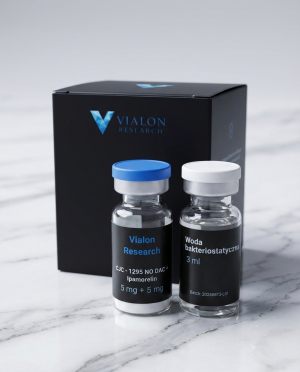
Zestaw GHRH + GHSR · analog + agonista
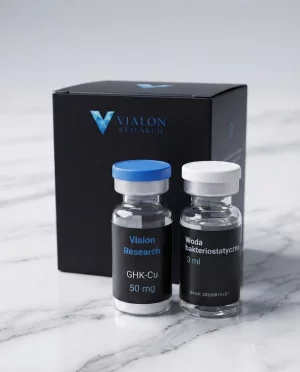
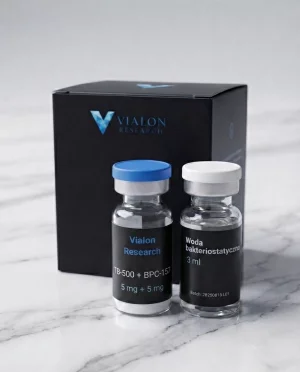
Zestaw dwóch peptydów badawczych
TL;DR: Laboratory analysis results can differ even for the same test material, because methods such…
TL;DRThis article explains how HPLC/MS is widely used as a set of laboratory analytical methods…
Reading a COA requires verifying the batch, analytical methods, acceptance criteria, and test results.
BPC-157 (Body Protection Compound-157) is a synthetic pentadecapeptide consisting of 15 amino acids (sequence: GEPPPGKPADDAGLV). It is a fragment of the human gastric juice protective protein BPC. CAS number: 137525-51-0, molecular weight ~1419.5 Da.
BPC-157 is remarkably stable under acidic conditions (pH < 2.0), maintaining activity for over 24 hours at gastric pH. This is exceptional for a peptide of this size. It also lacks aromatic amino acids, reducing UV-induced degradation. Four proline residues provide structural rigidity and resistance to enzymatic breakdown.
BPC-157 is a 15-amino acid gastric peptide acting through the nitric oxide (NO) pathway and growth factors (VEGF, EGF), stable at acidic pH. TB-500 is a 43-amino acid fragment of thymosin beta-4 acting through G-actin binding. Both are available individually and as a ready-made TB-500 + BPC-157 blend.
Store the lyophilized peptide (unopened vial) at -20°C to -80°C, protected from light and moisture. After reconstitution in sterile water, store at 2-8°C and use within 30 days. BPC-157 shows enhanced stability at acidic pH compared to other peptides of similar size.
Every batch undergoes RP-HPLC purity analysis (≥98%) and molecular weight verification by mass spectrometry (MS). Certificate of Analysis included. The lyophilized peptide ships within 24h from our -20°C cold storage facility in Poland.