
TL;DR
This article explains how HPLC/MS is widely used as a set of laboratory analytical methods for separating, identifying, and characterising chemical compounds, without making absolute or marketing claims.
What is HPLC/MS?
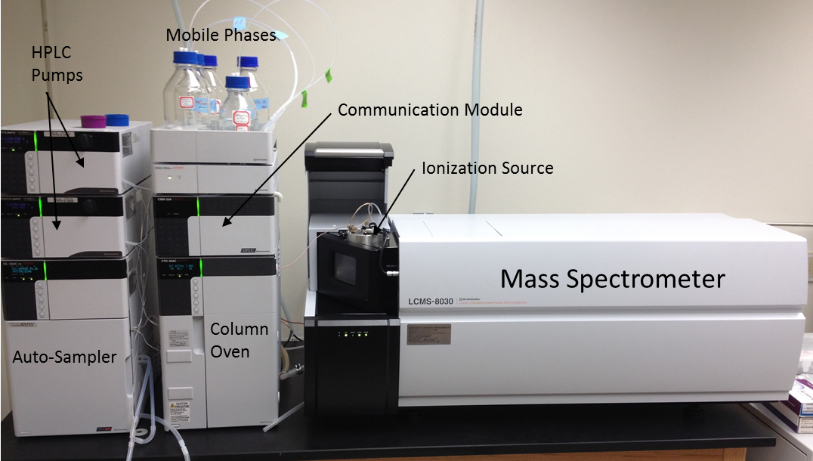
HPLC/MS is a combination of two well-established analytical methods: high-performance liquid chromatography (HPLC) and mass spectrometry (MS). Coupling these techniques enables sequential separation of sample components followed by further analysis with respect to molecular mass and ionic structure.
In a laboratory context, each method serves a distinct function:
- HPLC is used to separate the components of a mixture based on their interactions with the stationary and mobile phases.
- MS enables detection and analysis of ionised molecules by measuring the mass-to-charge ratio (m/z).
Combining HPLC with MS yields more complex analytical data than either technique used independently.
Why Does HPLC/MS Matter in the Context of Quality and Laboratory Compliance?
Application in Routine Analytical Procedures
HPLC/MS is widely used in research, analytical, and quality-control laboratories, particularly in situations that require:
- analysis of complex samples,
- characterisation of chemical compounds,
- verification of results obtained by other analytical methods.
The method is frequently described in laboratory procedures as a supporting element in the assessment of sample properties.
Importance for Documentation and Transparency
Data obtained by HPLC/MS can be used in analytical reports and laboratory documentation to describe the methodology employed and the scope of the analysis. Such information helps clarify how the measurement was performed and which parameters influenced the result.
It should be emphasised that HPLC/MS results always require interpretation in relation to the analytical conditions and the limitations of the method.
How Does High-Performance Liquid Chromatography (HPLC) Work?
What Is Chromatographic Separation?
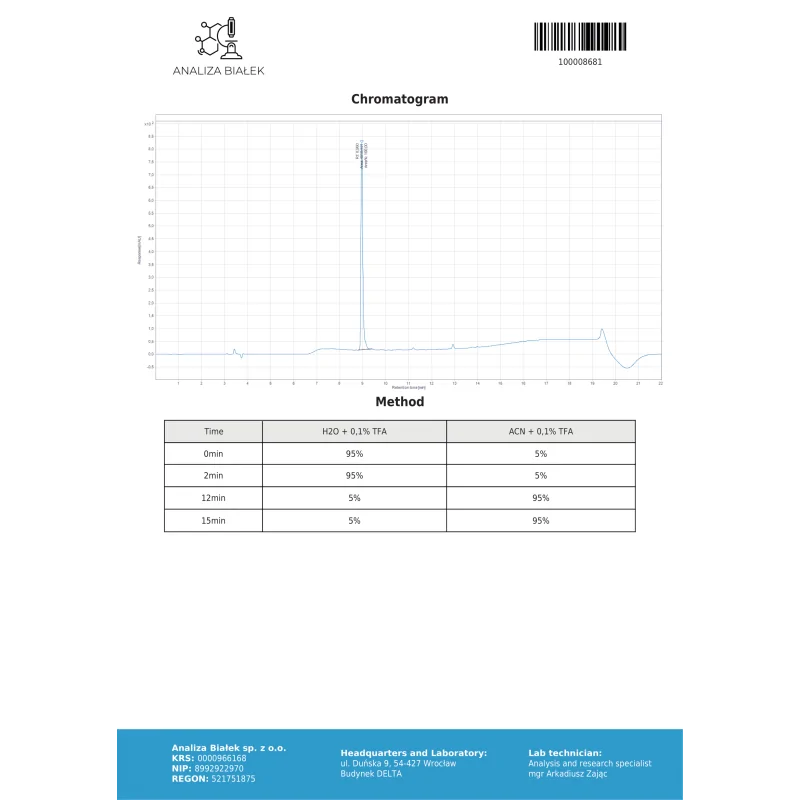
HPLC involves passing a liquid sample through a column packed with a stationary phase, driven by a mobile phase under high pressure. The individual components of the sample interact with the stationary phase to varying degrees, leading to their separation over time.
What Information Does HPLC Analysis Provide?
HPLC analysis can provide data on:
- retention times of individual components,
- relative number of signals in the sample,
- chromatographic profile of the mixture.
HPLC is frequently used as a preliminary method prior to further detection-based analysis.
How Does Mass Spectrometry (MS) Work?
Fundamentals of Mass Spectrometry
Mass spectrometry (MS) involves ionising molecules and separating them in an electric or magnetic field based on their mass-to-charge ratio. The resulting mass spectrum displays signal intensities corresponding to specific m/z values.
What Can MS Analysis Indicate?
MS data are commonly used for:
- confirming molecular mass,
- analysing ion fragmentation patterns,
- supporting structural characterisation of compounds.
Interpretation of a mass spectrum requires specialist knowledge and reference to known standards and measurement conditions.
How Does an HPLC/MS Analysis Proceed Step by Step?
1. Sample Preparation
The sample is dissolved in an appropriate solvent and filtered to remove particulate matter.
2. Chromatographic Separation
HPLC separates the sample components, which elute from the column at different time points.
3. Ionisation and Detection
The separated components are directed into the mass spectrometer, where they undergo ionisation and detection.
4. Data Recording
The system records chromatograms and mass spectra, which are subsequently subjected to analysis.
How to Interpret HPLC/MS Data?
What Does Retention Time Mean?
Retention time can indicate the relative physicochemical properties of sample components, but on its own it does not constitute unambiguous identification.
What Do Peaks in the Mass Spectrum Mean?
Peaks in the MS spectrum correspond to ionised forms of molecules or their fragments. Their interpretation is based on analysis of m/z values and fragmentation patterns.
Common Misconceptions and Limitations of the Method
Lack of Absolute Unambiguity
HPLC/MS does not guarantee complete identification of all sample components without additional comparative data or supporting methods.
Dependence on Analytical Conditions
Analysis results can vary depending on the parameters applied, such as column type, mobile phase composition, or ionisation source.
Practical Significance for Informed Decision-Making
Understanding how HPLC/MS works allows for a better assessment of the range of information that can be derived from analytical reports. The method supports informed interpretation of laboratory data, provided it is treated as one element of a broader analytical process rather than a source of absolute conclusions.