Variability of HPLC and MS Laboratory Analysis Results
TL;DR: Laboratory analysis results can differ even for the same test material, because methods such…

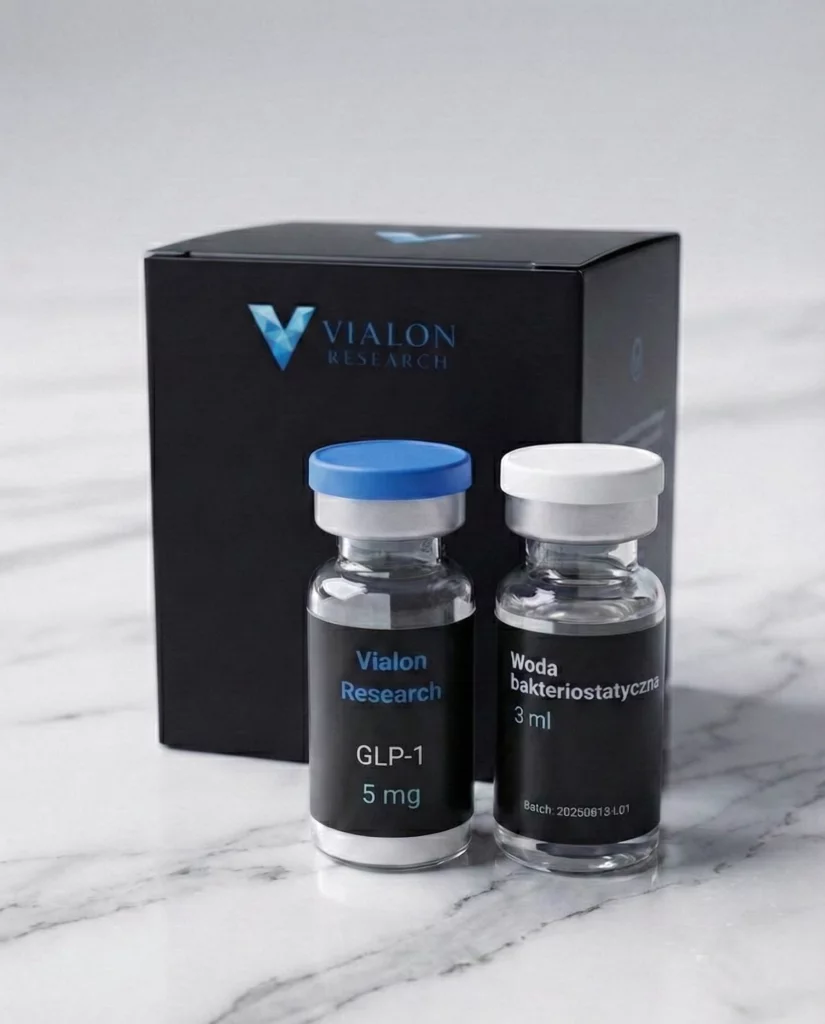
GLP-1 receptor monoagonist · 31 amino acids · CAS 910463-68-2
| Parameter | Value |
|---|---|
| Molecular formula | C₁₈₇H₂₉₁N₄₅O₅₉ |
| Molecular weight | ~4113 Da |
| Amino acid count | 31 |
| CAS number | 910463-68-2 |
| PubChem CID | 56843331 |
| Isoelectric point (pI) | 4.5–5.0 |
| Physical form | White lyophilized powder |
| Purity | >98% (RP-HPLC) |
| Classification | Chemical reagent / research material |
| Intended use | For in vitro research use only, not for use in humans or animals |
Not classified as a hazardous substance under CLP regulation. Offered as a chemical reagent for in vitro laboratory use, within the framework of applicable European Union chemical substances regulations (REACH, CLP).
Reconstitution and storage conditions:
Typical analytical equipment:
All working parameters should be selected according to the research laboratory’s internal protocol. Product intended exclusively for in vitro and analytical use; not for human or animal use.
Sematic GLP-1 is a synthetic incretin peptide analog with a 31-amino acid sequence, designed as a selective monoagonist of the GLP-1R receptor. The structure is based on the native GLP-1(7-37) peptide sequence with key modifications: amino acid substitutions at positions 8 (Ala to Aib) and 34 (Lys to Arg), plus C18 fatty acid acylation at position Lys26 via a glutamic acid linker. The Aib substitution at position 8 stereoelectronically stabilizes the helical conformation of the N-terminus while eliminating the DPP-4 proteolytic cleavage site. The C18 acyl chain provides non-covalent albumin binding, which in in vitro conditions translates to an extended half-life in serum protein-containing solutions.
The molecular weight of the peptide (~4113 Da) and isoelectric point in the range of 4.5 to 5.0 determine its solubility properties. In radioligand binding studies (in vitro), Sematic demonstrates nanomolar affinity for the human GLP-1R receptor with no significant activation of GIPR or GCGR, classifying it as a monoagonist with high receptor selectivity.
The GLP-1R receptor belongs to the class B1 G protein-coupled receptor (GPCR) family. It is a seven-transmembrane domain receptor whose N-terminal extracellular domain (ECD) is responsible for initial ligand recognition, while the transmembrane domains form a binding pocket for the peptide helix. Upon agonist binding, conformational changes in the receptor enable coupling with the Gs protein.
The signaling cascade proceeds as follows: activated Gs protein stimulates adenylyl cyclase (AC), leading to increased intracellular cyclic AMP (cAMP) levels. Elevated cAMP activates protein kinase A (PKA) and Epac2 (Exchange protein directly activated by cAMP). PKA phosphorylates a range of intracellular substrates, including the CREB transcription factor (cAMP Response Element Binding protein), which modulates target gene expression.
In parallel with the Gs/cAMP pathway, agonist binding induces recruitment of beta-arrestin 1 and 2, leading to internalization of the receptor-ligand complex into endosomes. In vitro studies on cell lines overexpressing GLP-1R (HEK293, CHO) have demonstrated that individual GLP-1 analogs can exhibit differential activation profiles of Gs vs. beta-arrestin pathways, a phenomenon termed "biased agonism." The ratio of activation between these two pathways has significant implications for the pharmacological profile of the compound in preclinical studies.
Drucker DJ in a seminal 2006 review [1] presented a comprehensive characterization of incretin hormone biology, with particular focus on GLP-1R receptor pharmacology. The paper describes the structure of the class B1 GPCR receptor, the mechanism of Gs protein coupling, and the cAMP/PKA/CREB signaling cascade. The author detailed the tissue distribution of GLP-1R and the role of DPP-4 enzyme in proteolytic degradation of native GLP-1 peptide.
Mayo KE et al. (2003) [2] published a detailed analysis of the molecular structure of the GLP-1R receptor, including the organization of transmembrane domains and ligand binding mechanism. Through site-directed mutagenesis studies, key amino acid residues of the ECD domain responsible for recognition of the peptide agonist helix were identified.
Wootten D et al. (2013) [3] investigated the phenomenon of biased agonism in the context of the GLP-1R receptor. Using a panel of reporter assays in CHO and HEK293 cell lines, the authors demonstrated that individual GLP-1 peptide analogs activate the Gs/cAMP and beta-arrestin pathways in different proportions. Results indicated that the biased signaling profile correlates with receptor internalization kinetics and cell surface recycling.
Jorgensen R et al. (2005) [4] conducted a series of BRET (Bioluminescence Resonance Energy Transfer) experiments on HEK293 cells overexpressing GLP-1R, demonstrating the kinetics of beta-arrestin 1 and 2 recruitment following agonist stimulation. The authors described the relationship between C-terminal receptor phosphorylation by GRK kinases and internalization efficiency in clathrin-coated pits.
Receptor profile comparison of the monoagonist Sematic with the dual agonist Tirzepic GLP-1 + GIP and the triple agonist Retatric Triple G:
| Parameter | Sematic GLP-1 | Tirzepic GLP-1 + GIP | Retatric Triple G |
|---|---|---|---|
| Target receptors | GLP-1R | GLP-1R + GIPR | GLP-1R + GIPR + GCGR |
| Agonism type | Monoagonist | Dual agonist | Triple agonist |
| Amino acid count | 31 | 39 | 39 |
| Base sequence | GLP-1(7-37) | Native GIP | Native GIP (modified) |
| Lipid modification | C18 acylation | C20 acylation | C20 acylation |
| Signaling pathway | Gs/cAMP (GLP-1R) | Gs/cAMP (GLP-1R + GIPR) | Gs/cAMP (GLP-1R + GIPR + GCGR) |
| Molecular weight | ~4113 Da | ~4813 Da | ~4731 Da |
The monoagonistic selectivity of Sematic for GLP-1R serves as a reference point in comparative incretin signaling studies. In experiments on isolated cell lines overexpressing individual receptors, multi-receptor analogs activate additional Gs/cAMP pathways in tissues where GLP-1R expression is low but GIPR or GCGR are dominant.
Sematic GLP-1 is supplied as a lyophilized powder with purity above 98% (RP-HPLC). In dry form, store the peptide at -20°C to -80°C for stability of at least 24 months. After reconstitution in sterile water, store at 2-8°C and use within 30 days. Avoid repeated freeze-thaw cycles. The C18 fatty acid acylation enhances peptide stability in solution compared to the native GLP-1 sequence, reducing susceptibility to hydrolytic degradation.
Learn more about GLP-1R receptor biology, incretin peptide pharmacokinetics, and the role of DPP-4 enzyme in our knowledge base article GLP-1 and GIP: Incretin Signaling Mechanisms.
Produkt jest surowcem chemicznym przeznaczonym wyłącznie do zastosowań badawczych, naukowych i analitycznych in vitro. Nie jest przeznaczony do użytku ludzkiego ani weterynaryjnego, w tym w celach diagnostycznych, terapeutycznych, profilaktycznych lub żywieniowych.
Produkt nie jest sklasyfikowany jako substancja niebezpieczna zgodnie z rozporządzeniem CLP (WE) nr 1272/2008. Oferowany jest jako odczynnik chemiczny w ramach obowiązujących w Unii Europejskiej przepisów dotyczących substancji chemicznych (REACH, CLP). Nie stanowi produktu leczniczego, suplementu diety, wyrobu medycznego ani kosmetyku w rozumieniu obowiązujących przepisów prawa.
Substancję niewykorzystaną należy utylizować zgodnie z lokalnymi przepisami dotyczącymi odpadów chemicznych. W warunkach laboratoryjnych: neutralizować i utylizować wraz z odpadami laboratoryjnymi. Nie wylewać do kanalizacji.
Produkt oferowany jest zgodnie z obowiązującymi przepisami Unii Europejskiej dotyczącymi substancji chemicznych (REACH, CLP) oraz prawem polskim w zakresie obrotu odczynnikami chemicznymi i materiałami badawczymi. Pełne warunki sprzedaży oraz klasyfikacja produktu zawarte są w Regulaminie Sklepu.
Dokonując zakupu, Klient potwierdza zapoznanie się z powyższymi informacjami oraz akceptuje postanowienia Regulaminu.
W przypadku pytań dotyczących obchodzenia się z produktem lub informacji regulacyjnych: kontakt@peptydy-sklep.com.
Ověřená hodnocení zákazníků tohoto produktu
Wysyłka szybką ,kontakt ze sklepem świetny produkt beż zarzutu
Szybko i działa jak powinno
Git
TL;DR: Laboratory analysis results can differ even for the same test material, because methods such…
TL;DRThis article explains how HPLC/MS is widely used as a set of laboratory analytical methods…
Reading a COA requires verifying the batch, analytical methods, acceptance criteria, and test results.
Liofilizat peptydowy należy przechowywać w temperaturze -20°C do -80°C w celu zapewnienia maksymalnej stabilności. Po rekonstytucji roztwór można przechowywać w lodówce (2-8°C) przez okres do 4 tygodni. Unikaj wielokrotnego zamrażania i rozmrażania.
W Polsce peptydy są dostępne wyłącznie jako odczynniki chemiczne do celów naukowych i badawczych. Nie są dopuszczone do użytku jako produkty lecznicze ani suplementy diety, a ich status prawny nie pozwala na stosowanie ich w celach konsumenckich.
Wszystkie peptydy dostępne na naszej stronie są oferowane wyłącznie jako odczynniki chemiczne przeznaczone do celów naukowych i badawczych. Nie są dopuszczone do sprzedaży jako produkty lecznicze ani suplementy diety, nie są przeznaczone do spożycia.
Zamówienia złożone do godziny 15:00 są wysyłane tego samego dnia roboczego. Standardowa dostawa to 1-2 dni robocze. Oferujemy wysyłkę przez InPost Paczkomat oraz kuriera.