
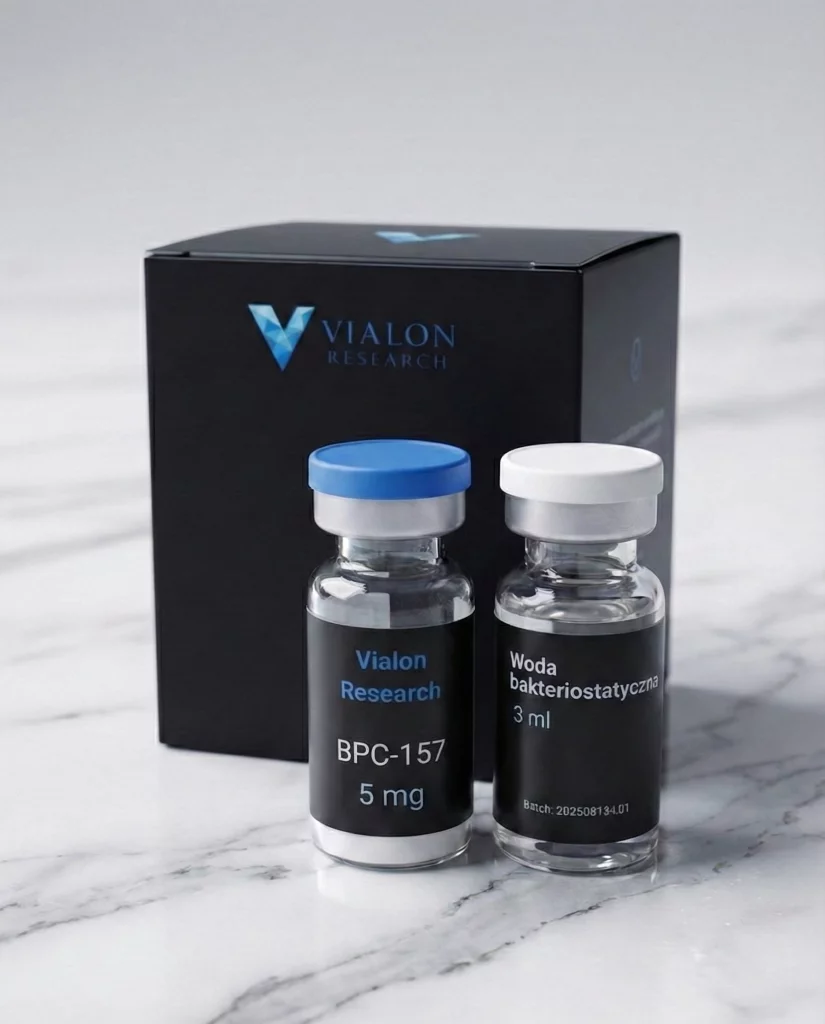
Peptides are short chains of amino acids that build proteins in nature. Their structure — the exact sequence of amino acids — determines not only their unique properties, but also how long they retain their freshness and integrity. For anyone working with research peptides, understanding these mechanisms is essential to selecting products of the highest quality.
Why Does Sequence Affect Stability?
Every peptide has a unique sequence — for example, glycine-alanine-lysine — which defines its shape and susceptibility to change. Some amino acids, such as cysteine and methionine, are particularly sensitive to oxidation, a reaction with oxygen that weakens bonds. Others, such as proline, stabilize the structure and make the peptide more resistant to degradation.
Residues near the N-terminus (the start of the chain) often carry groups prone to hydrolysis — breakdown triggered by water. The C-terminus, in turn, can be vulnerable to proteases, enzymes that cleave peptide bonds. A well-designed sequence minimizes these risks, as is evident in the pure, synthetic peptides offered by specialist research suppliers.
Factors That Accelerate Degradation
Peptides degrade under the influence of environmental conditions:
- Temperature: Elevated temperatures (above 25°C) accelerate chemical reactions, causing aggregation or fragmentation. Low temperatures (e.g. -20°C) slow this process considerably.
- Humidity and light: Water catalyzes hydrolysis, while UV radiation from sunlight triggers photodegradation, damaging sensitive residues.
- pH: Extreme values (below 3 or above 9) destabilize peptide bonds.
- Oxygen: Oxidation of methionine or tryptophan shortens shelf life.
In practice, this means that peptides stored as lyophilized (freeze-dried) powder are more stable than those in solution.
How to Ensure Long Peptide Stability?
When sourcing peptides for research, pay attention to:
- Purity and synthesis method: High-quality synthesis (e.g. Fmoc solid-phase) minimizes impurities that can catalyze degradation.
- Packaging: Sealed vials with dry ice or inert gas protect against moisture and oxygen.
- Storage: Always refrigerate (2–8°C) after reconstitution; store lyophilized peptides in the freezer. Avoid repeated freeze-thaw cycles.
- Sequence modifications on the label: Some sequences — particularly those with modifications such as acetylation — are inherently more stable.
Regularly checking the appearance (white powder without clumps) and the expiry date helps maintain product integrity throughout the research period.
Summary
A peptide’s sequence is not merely its „identity” — it is the key to its stability. Understanding degradation pathways enables informed decisions when sourcing research peptides, ensuring products of the highest chemical integrity. Investing in stable peptides is fundamental for researchers and experimenters who demand consistent, reproducible results.
Sources
- Factors affecting peptide stability: https://pmc.ncbi.nlm.nih.gov/articles/PMC5665799/
- Lyophilized vs non-lyophilized peptides: https://verifiedpeptides.com/knowledge-hub/lyophilized-vs-nonlyophilized-peptides-a-comprehensive-comparison/
- pH and temperature effects: https://pmc.ncbi.nlm.nih.gov/articles/PMC6396125/
- Biopharmaceutical stability: https://www.bioprocessintl.com/formulation/stability-considerations-for-biopharmaceuticals-overview-of-protein-and-peptide-degra…
- Peptide handling guidelines: https://www.sb-peptide.com/support/handling-storage/
- Formulation for peptide stability: https://pmc.ncbi.nlm.nih.gov/articles/PMC10056213/
- Peptide degradation pathways: https://www.sigmaaldrich.com/US/en/technical-documents/technical-article/research-and-disease-areas/cell-and-developmental-biolo…